Joseph Pritchard
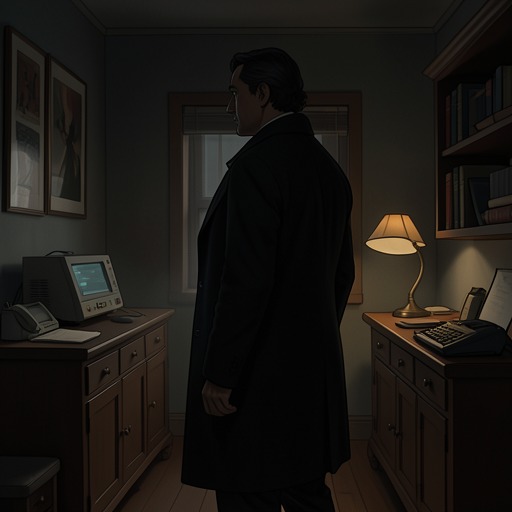
The LuminariesJoseph Pritchard is a chemist in Hokitika and a principal supplier of opium on the West Coast. His position makes him an expert witness, a figure in the town’s investigations, and a point of connection between users, dealers, and commercial intermediaries. Yet his professional confidence does not resolve his personal entanglement with Anna Wetherell: he trusts neither her account nor his own feelings, and wishes he could love her even as he insists that he does not.
Identity and Professional Position
Pritchard’s work is based at a laboratory and drug hall on Collingwood Street. He is described as the sole supplier of opium to the West Coast dens south of the Grey River, a role that places him near the consequences of addiction as well as the transactions that sustain it. Others identify him as the chemist who sells opium into this network. His expertise is practical and specific: after Anna’s overdose, he believes he can determine whether the remaining drug has been mixed with another substance, if he can obtain a sample for examination.
His supply chain runs through Francis Carver, a former convict whom Pritchard regards as courteous and fair. Pritchard says he has no reason to think Carver would deliberately harm him or his business. He does not know whether Carver bears ill will toward Chinese people, and emphasizes that he does not sell directly to Chinese customers: Carver supplies him, and Pritchard is the intermediary. This arrangement makes Pritchard a consequential link in the opium trade while also leaving him dependent on a supplier whose wider dealings he does not fully understand.
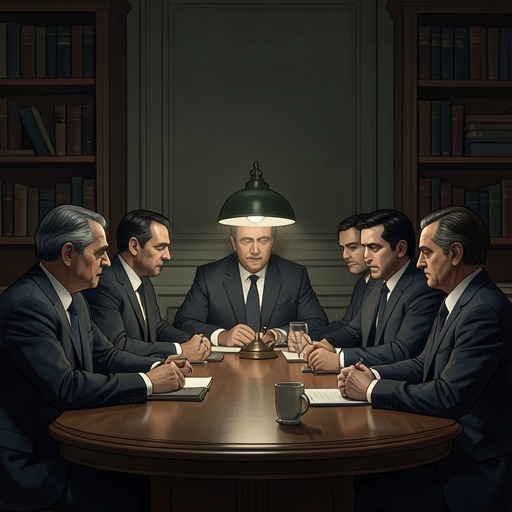
Pritchard’s professional standing is recognized beyond his own business. Harald Nilssen vouches for his character when he is invited to a private meeting at the Crown Hotel to pool information about Crosbie Wells’s death. Pritchard is included because laudanum associated with his business was found in Wells’s cottage. The invitation both affirms his local credibility and places his trade within the investigation: the chemist is asked to help interpret a death in which one of his products may matter.
Anna Wetherell and the Overdose
Pritchard’s concern for Anna shapes his response to her overdose. He is irritated that she did not contact him herself, reasoning that his expertise made him the person to consult. He rejects the idea that she intended to die and considers two alternatives: that she was made to take the drug against her will, or that the substance had been altered to injure her. These are his suspicions, not established findings. He wants to examine the remaining portion of the opium, but Ah Sook is furious with him and refuses to cooperate; Pritchard’s request, passed through Dick Mannering, does not secure the sample.
Pritchard nevertheless goes to the Gridiron Hotel, where Anna lives, rather than returning directly to his laboratory after leaving Nilssen’s office. He arrives on his own timetable, despite the fact that Anna does not usually receive callers at that hour. His visit is presented as professional concern, but it is also personal: he believes he knows her well enough to reject the suicide explanation. He sees her life as miserable but not without its pleasures, and does not consider her violent. That confidence in his understanding of Anna is later complicated by his acknowledgment that he does not trust her.
His thinking does not entirely settle on the explanation he prefers. Remembering Anna’s own admission that thoughts of suicide can arise from time to time, Pritchard recognizes that the possibility cannot simply be dismissed. The moment leaves his certainty under pressure: he accepts that she may have spoken honestly about such thoughts, even while remaining convinced that the overdose was not an attempt to end her life. His expertise can test the drug, but it cannot give him equal certainty about Anna’s intentions.
Suspicion, Prejudice, and Investigation
Pritchard’s investigative instincts combine useful attention to motive with racialized suspicion. In discussion with Nilssen, he argues that justice will focus on who stood to profit from a death and points to the tidy profit he believes the other man made. Elsewhere, when considering wrongdoing connected to Chinese miners, he confidently attributes the work to a Chinese person and invokes permit-sharing and the difficulty, in his view, of distinguishing individuals. He treats Chinese networks in Chinatown as a likely source of outside criminal activity. The certainty of this accusation is not evidence of a solved case; it reveals how readily his reasoning can turn into a racial stereotype.
His role in the inquiry around Wells’s death also reflects the town’s reliance on overlapping local knowledge. Pritchard is summoned to the Crown Hotel meeting alongside men connected to the cottage, the estate, and the investigation. The laudanum found there gives his professional knowledge a direct bearing on the case, while Nilssen’s recommendation supplies the assurance needed to include him. At another point, Pritchard anxiously asks whether a letter has been burned and notices that someone is carrying something. The concern places him among people alert to the destruction or concealment of evidence, though the exchange alone does not establish what he knows about the letter.
Pritchard later helps organize observation around a séance involving Anna and Lydia Wells. He recommends that Nilssen keep watch on Anna while Charlie Frost watches Lydia, warning that attention can be diverted and that both women should remain under observation. His advice is tactical, but its grounds are personal distrust. He assembles what he regards as known facts: Anna was the last person to see Emery Staines alive, he believes she lied about consuming the opium herself, and she is preparing to summon Staines through a séance. These points lead him to insist that Staines must be somewhere, rather than accepting that he has vanished without trace.
When Frost asks whether he trusts Anna, Pritchard finally states the contradiction directly: he does not trust her, does not love her, and wishes that he did. The admission recasts his earlier interventions. Concern, suspicion, and professional curiosity are not cleanly separated in him; he is drawn toward Anna while resisting the intimacy that such concern might imply. The novel gives no simple resolution to that tension.
Evidence, Testimony, and Later Encounters
Pritchard’s attention to the Staines mystery includes calculation as well as conjecture. When considering the possibility that Staines was shut inside a shipping case after Carver left for Dunedin, he calculates that thirteen days without water or air would have passed. The estimate makes the practical stakes of the theory explicit, but it remains a conditional inference, not confirmation that Staines was in the case.
Pritchard also appears as a witness in the later court proceedings concerning the pistol incident at the Gridiron. Under questioning, he confirms Anna’s account of the events on 27 January: the first bullet disappeared in the misfire, and Aubert Gascoigne fired the second into Anna’s pillow as an experiment. In this setting his contribution is bounded and evidentiary. He recounts what happened rather than resolving the larger mysteries of Anna’s memory or Staines’s disappearance.
His dealings with Carver come into clearer view in a later encounter at the Imperial Hotel. Pritchard introduces himself as a chemist, and Carver asks whether he has opium readily available. The exchange returns the two men to the practical basis of their association: Carver is Pritchard’s source, and opium is both a commodity and a route through which their lives intersect. The evidence establishes the inquiry about supply, not what Pritchard ultimately provides.
Narrative Role and Significance
Pritchard serves as a recurring observer of evidence that can be handled, tested, or counted: a portion of opium, a possible contaminant, a drug found in a cottage, a missing bullet, or the days a person might have survived inside a case. His work gives the novel a material vocabulary for problems that resist certainty. A chemist may be able to examine a substance, but Pritchard cannot establish Anna’s intentions from the drug alone, nor can his arithmetic prove where Staines has been.
His character is also defined by the distance between expertise and judgment. He correctly identifies that the opium might have been altered and seeks a test, yet his suspicions about Chinese wrongdoing lean on prejudice rather than demonstrated proof. He can offer useful testimony and still mistake distrust for knowledge. Meanwhile, his remark that Anna’s debt and dependency limit the propositions available to her returns uncomfortably to Walter Moody’s thoughts. That recurrence places Pritchard’s view of her within a wider recognition of how dependence and debt narrow a woman’s choices, even as his own concern remains compromised by his inability to trust her. Through him, the opium trade is not merely background commerce: it connects care, expertise, social control, and suspicion, without allowing any one of them to stand as a complete explanation.